
Journal · 2020-02-01
Needle Felting Explained: Felting Needles
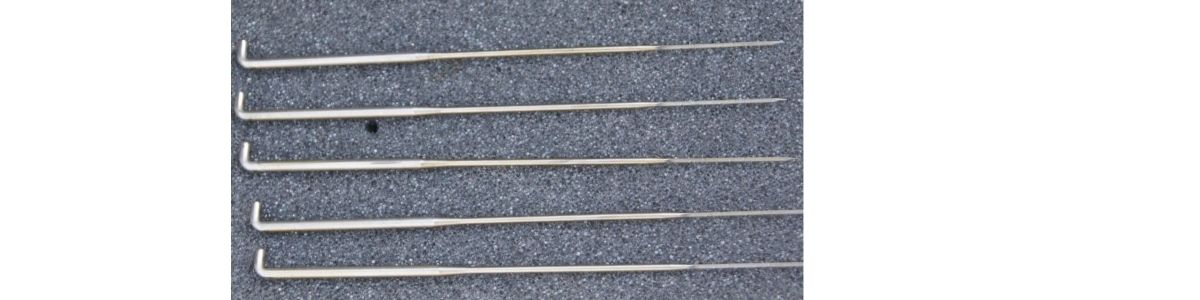
A simple explanation of felting needles. Mysterious tools for a curious craft.
Felting needles are essential tools for needle felting, a popular crafting technique used to create three-dimensional sculptures and textiles. These specialized needles have barbs along their blades that catch and tangle fibers, binding them together to form felted structures.
Sounds simple enough, right?
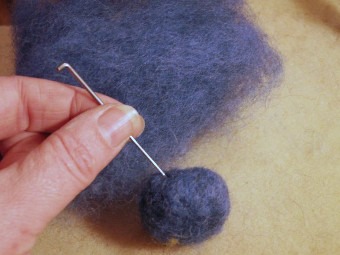
Felting Needles are more than a bit confusing for beginner needle felters. When I first decided to give needle felting a try, I just assumed there was only one kind of felting needle. I found there were many different choices and I had no idea why.
I didn’t know felting needles were so fragile (and sharp) and I didn’t know I needed spares. I wondered what the different numbers and letters meant. What is a 36t? What is a star felting needle? What is a triangle needle? What kind do I need? They couldn’t possibly be that complicated!
An Explanation of Felting Needles: The Basics
Felting Needles are made of steel and are designed to fit into industrial felting machines. The ‘L’ shaped handle end and the shank are extremely strong but the working blade end is really fragile and very sharp.
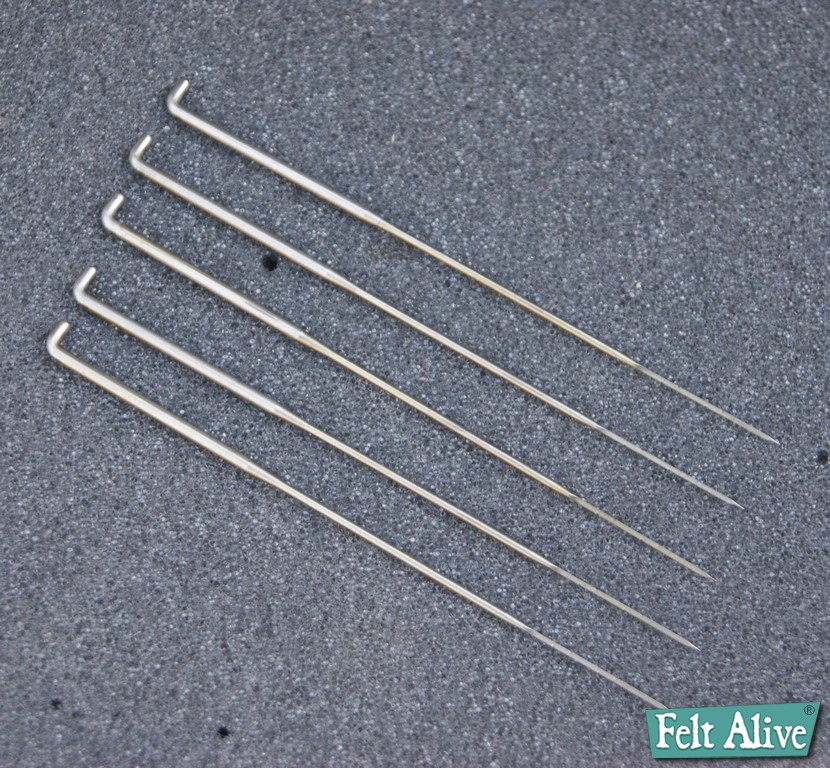
While felting needles LOOK nearly exactly alike there are differences that make certain types work better for specific tasks or types of wool.
Not to mention that selecting felting needles that feel right to you is definitely a personal preference so it’s important to try out different types. Since there are only a few common types of needles that most needle felters use, it’s pretty easy to figure out your favorites.
Let’s unravel the different sizes and needle styles.
Felting needles are manufactured for the nonwoven textile industry in many different sizes and styles. Over the years needle felters have settled on a small selection that work best for handcrafting. But something else I’ve noticed is more and more shops carrying felting needles in a mind-boggling selection of sizes. We like to keep things simple at Felt Alive, offering the tried and true sizes that needle felters have been using for years, plus a couple of new specialty needles.
Needle Size
Common felting needle sizes used by needle felters:
- 36t – heavy gauge
- 38 star – medium gauge
- 40t – fine gauge
- 40 star – fine gauge
- 42t – very fine gauge
Needles are gauged like wire. The larger the number, the finer the needle blade. So the number means the size of the needle.
Needle Styles
‘t’ and ‘star‘ refer to the blade type.
‘t’ stands for triangle blade – three barbed blade edges.
Triangle blade needles are the most common style of felting needles. Basically, a basic felting needle.
Spiral or Twist ‘t’ blade – this type is rather new to the felting scene and is essentially a triangle blade felting needle that has a bit of a twist to it.
‘star’ stands for a star blade with four barbed blade edges.
Star needles are a bit more specialized. They are very popular for needle felting and tend to be a bit stronger due to the blade structure
To sum up felting needle sizes and styles, the numbers and letters mean that a 40t felting needle is a 40 gauge with a triangle blade. A 38 star is a little heavier gauge with a star blade.
Each type felts a little differently and are useful for different felting tasks. One of the new needles we added is our 40 star. This needle is special because it has a shorter blade than most other needles. A shorter blade is a stronger blade and that is great news for beginner needle felters or for anyone who tends to break needles.
How do you tell the difference?
Felting Needle blades are so fine that it is hard to tell the difference between a ‘t’ and a ‘star’ without a very close-up look. But they do feel different once you start felting with the two types different types.

A ‘t’ triangle blade felting needle with three barbed blade edges.

A star needle with four barbed blade edges.
When I first started needle felting I kept a magnifying glass nearby to identify my needles. That was kind of inconvenient while in the middle of a project when I needed to switch needle styles. I haven’t improved my needle identification skills since then, I just color-coded my needles to solve that problem.
‘t’ and ‘star’ why use which and when
Because a triangle blade has one less barbed blade edge, it glides into the wool with a little less resistance than a star needle. A little less resistance matters during long felting sessions. BUT that extra blade and barbs of the star needles can make them the perfect tools for finer fiber or for shallow surface and finishing work.
Both styles definitely have their place on my felting pad. Once you start needle felting, and get a feel for the needles you will know when you need to switch to a different style of needle for different felting tasks. My best advice is to not overwhelm yourself with too many sizes and styles. Pick a few you love so you spend more time needle felting than trying to decide which needle to use.
Summing it Up
Giving a simple explanation of felting needles isn’t really all that simple, it seems. But once you get going with your needle felting it will all start to make sense.
Some types of felting needles are better for felting fine fiber, others work better for coarse. Some are stronger, some are longer, some have triangle blades, some have star blades, some blades are twisted and some even have the barbs in reverse. Some needles have the barbs very close to the tip, some only have one barb on each blade and others have several barbs on each blade. Each style makes the needle grab and tangle the fiber differently.
And now that you know the basics, you can dive stab in deeper! Learn all about the different types of felting needles we carry and why and how they are useful for your needle felting projects in the links below.




Felting Handles or Holders Explained
Felting Needles are designed to fit into industrial equipment and are not at all comfortable to hold. Needle felting isn’t a quick craft so comfort is important for long stretches of jabbing motion.
There are several types of handles (aka holders) that you can insert single or multiple needles in. The handles are more comfortable than holding a bare needle but I find the extra weight, bulk and length awkward to use. Any extra weight and bulk matters during long felting sessions using repetitive arm and wrist motion. Read Here how we solved that problem with our Felt Alive Felting Needles.
Thanks for reading! I hope this gave you a simple explanation of felting needles and helped demystify these curious little tools for this curious craft.
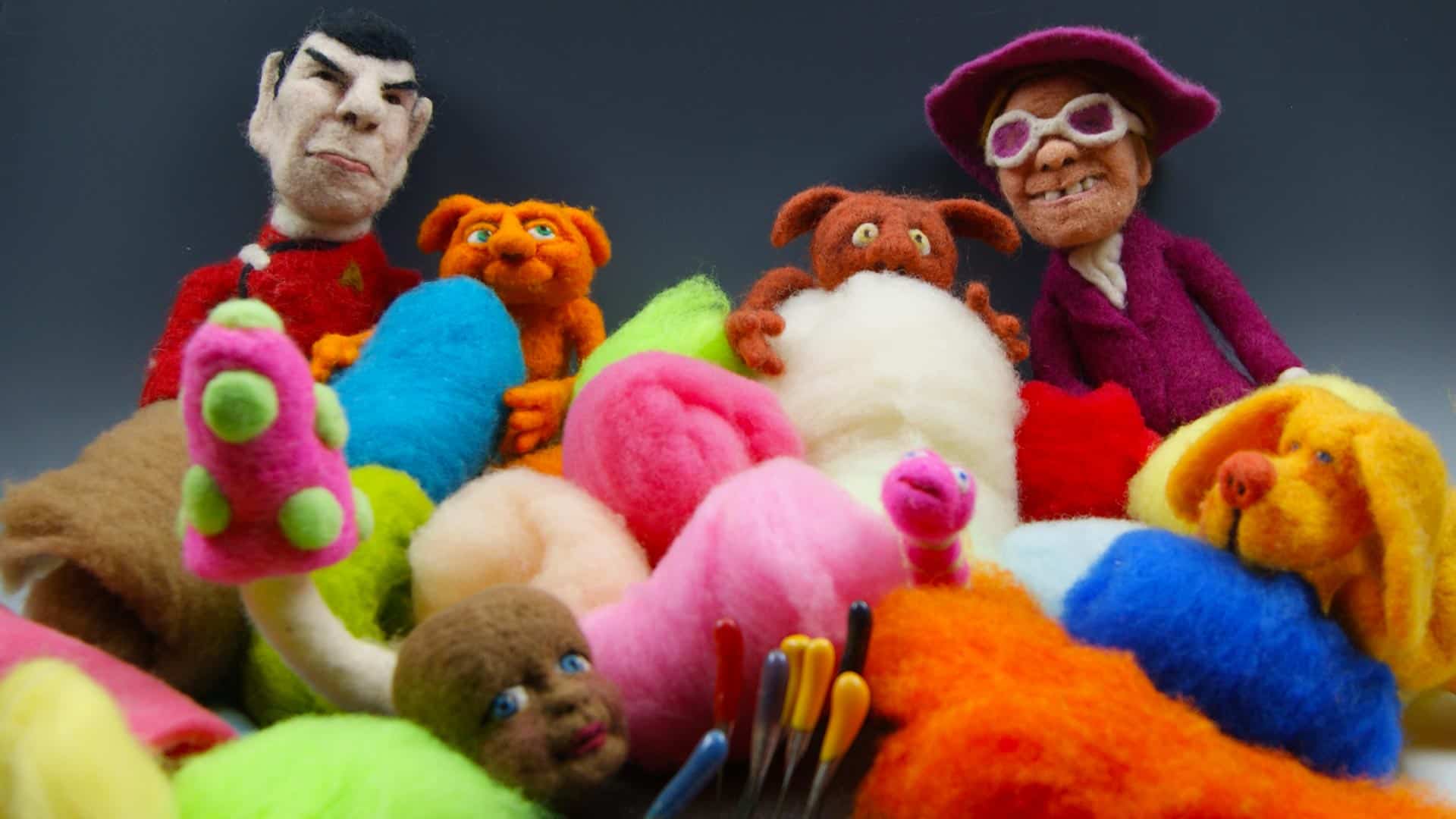
Magic Happens with a little wool and a felting needle
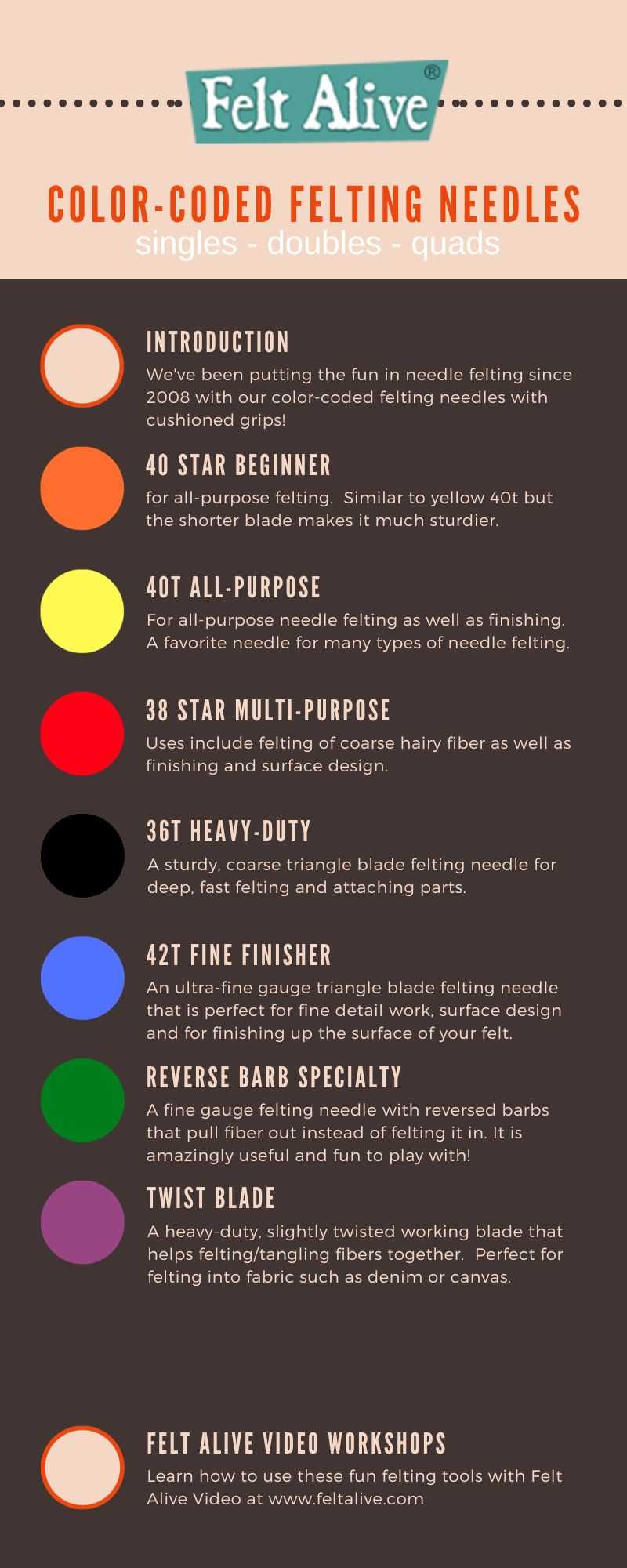
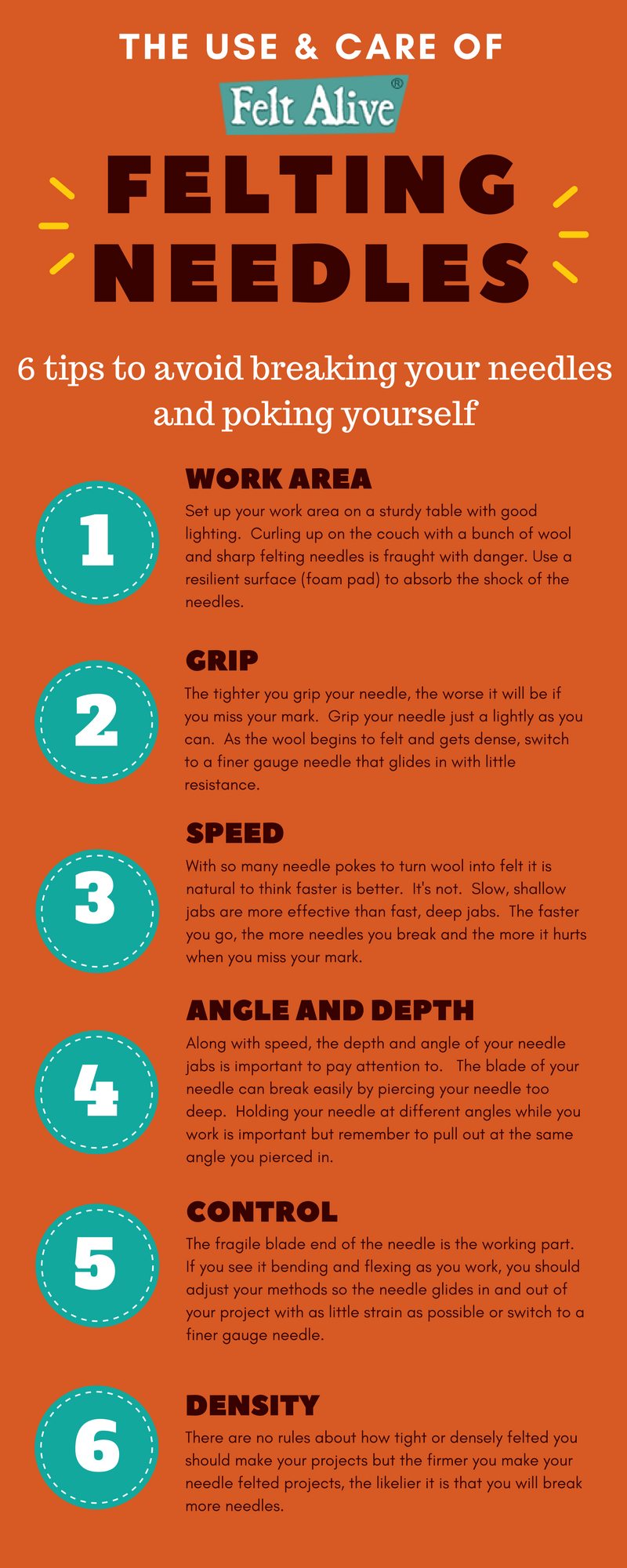
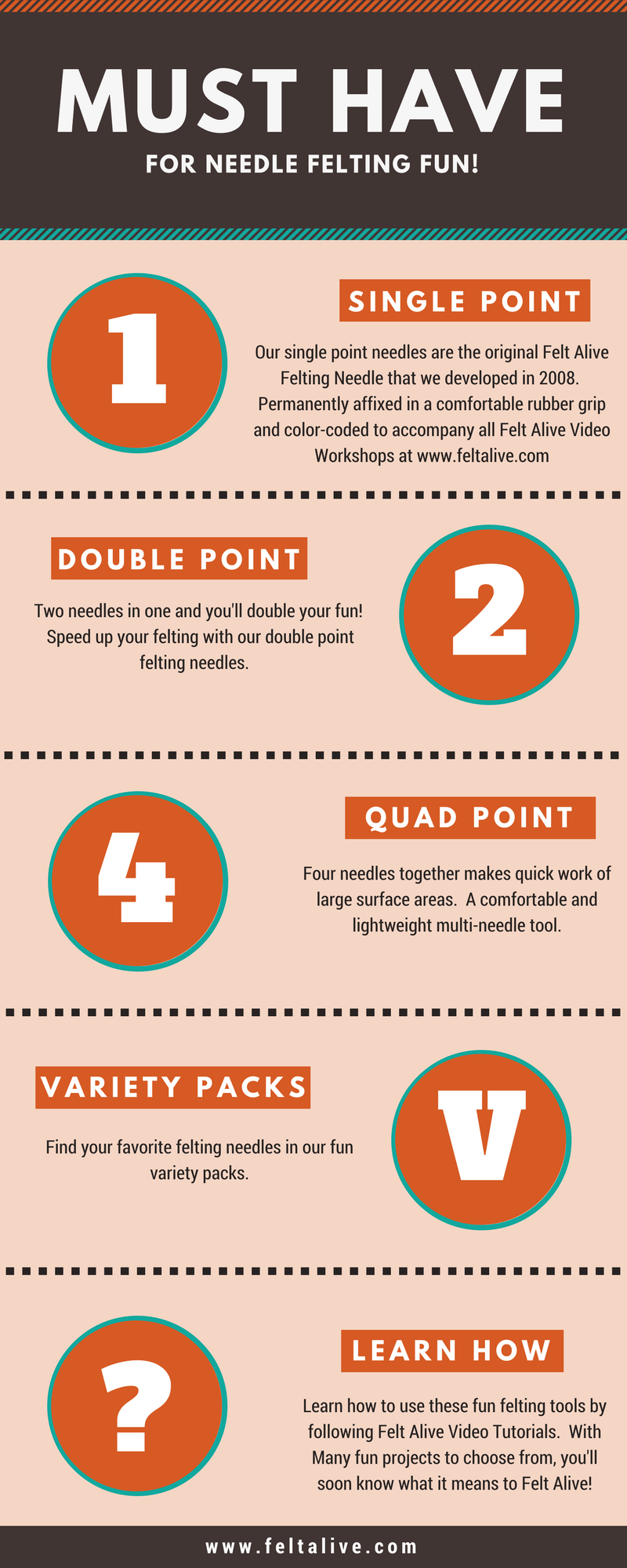
Handy Reference Guides for Felt Alive Felting Needles
Click on the graphics to share, save, bookmark or download for handy reference to help you get to know your new favorite felting needles.